
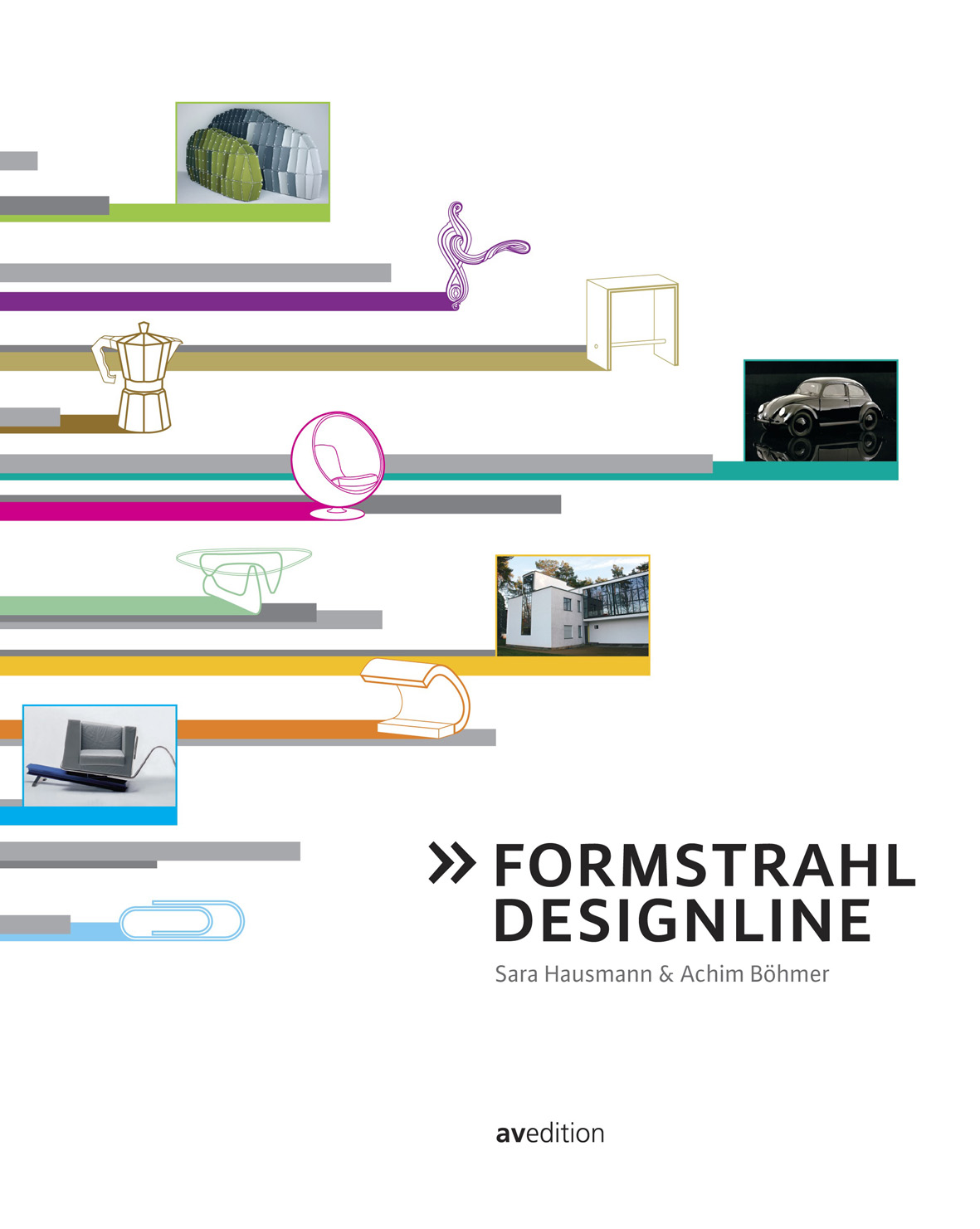
The Designline is 4.5 metres of design history which can either be used as a booklet, or unfolded as a large poster. It shows the history of design with examples from important eras and exemplary forms – whether in the shape of a kidney-shaped table designed by Isamu Noguchi as an example for organic design or the ground plan of Daniel Libeskind's Jewish Museum in Berlin, representative of deconstructionism. Numerous photos and information on historical developments, outstanding works and designers from each era accompany the historical outline, making the Designline relevant both as an example and in terms of product language. It is interdisciplinary and synoptic, covering industrial as well as graphic design and architecture. The period depicted starts with the industrial revolution. Sara Hausmann, communication design student at Folkwang University, and Achim Böhmer, qualified communication designer, live and work in Dortmund. Bernhard E. Bürdek, professor for design theory and design methodology, author of numerous books on product design, teaches at the Offenbach am Main Design College.
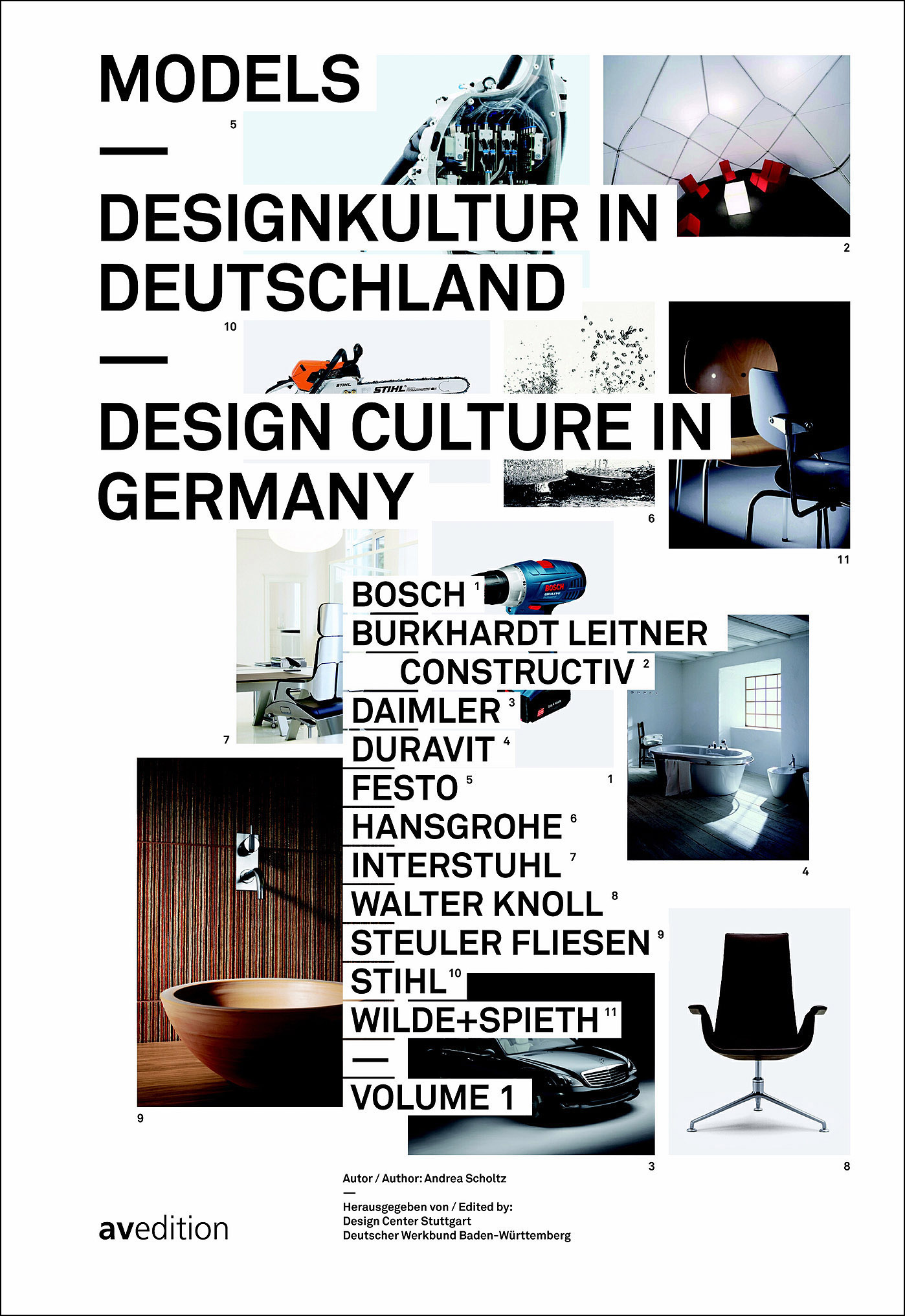
Design pays off – design matters, but design also tells a story. All three aspects are combined in the corporate stories of selected, standard-setting companies. They tell a tale of something very special and personal. They report of historical moments, momentous events and extraordinary characters. In a series of portraits, case studies or demonstrations of specific details, the reader is given an exciting behind-the-scenes glimpse of the creative-innovative core of companies. The new exhibition and book project of the Design Center Stuttgart and the Deutsche Werkbund Baden- Württemberg presents successful companies that boast special design achievements which have not only buoyed their economic success. They are also exemplary or even trailblazing for the industry, for entrepreneurial action, for the attitude towards society and the employees: design as an expression of an individual corporate culture.

Twelve objects tell a hundred years of industrial design history. The book presents products that were made between 1914 and 2004 and changed people’s everyday lives, designs that were marketed with new strategies, and objects that convey the way of life of a particular decade. Whether it is the Wonder Bowls by Earl Silas Tupper, the Valentine typewriter by Ettore Sottsass, or the iPod mini byJonathan Ive – design icons are brought to life in twelve contributions and through interviews with renowned designers and authors. Sophie Jung (born 1981) is an art historian and is currently working in Berlin as an art critic and editor. Stephen Palmer (born 1965) is an historian and publisher based in Melbourne, Australia. In collaboration with the HfG-Archiv / Ulmer Museum, Sophie Jung and Stephen Palmer developed "12 Gegenstände" into an interdisciplinary publishing project that has also become the conceptual basis for the corresponding exhibition at the HfG-Archiv Ulm.

The appearance and attractiveness of a design product depend to a large extent on the surface design. The texture changes both its form and significance. The sheen of the Panton Chair Classic is what sets it apart, colourful eloxated aluminium is reminiscent of sports equipment, metallic paint on cars or finger nails, patina suggests aging. Besides conveying such emotions through visual and tactile stimuli, functional coatings also react with their environment. As required, they have an adhesive effect, act as a water repellent, provide antibacterial protection or conduct heat. How do designers use this creative potential? "Make up" presents design classics from the collection of the Museum für Gestaltung Zürich in dialogue with products of contemporary designers like Konstantin Grcic, Alfredo Häberli, Ross Lovegrove, Jasper Morrison or Kenya Hara.
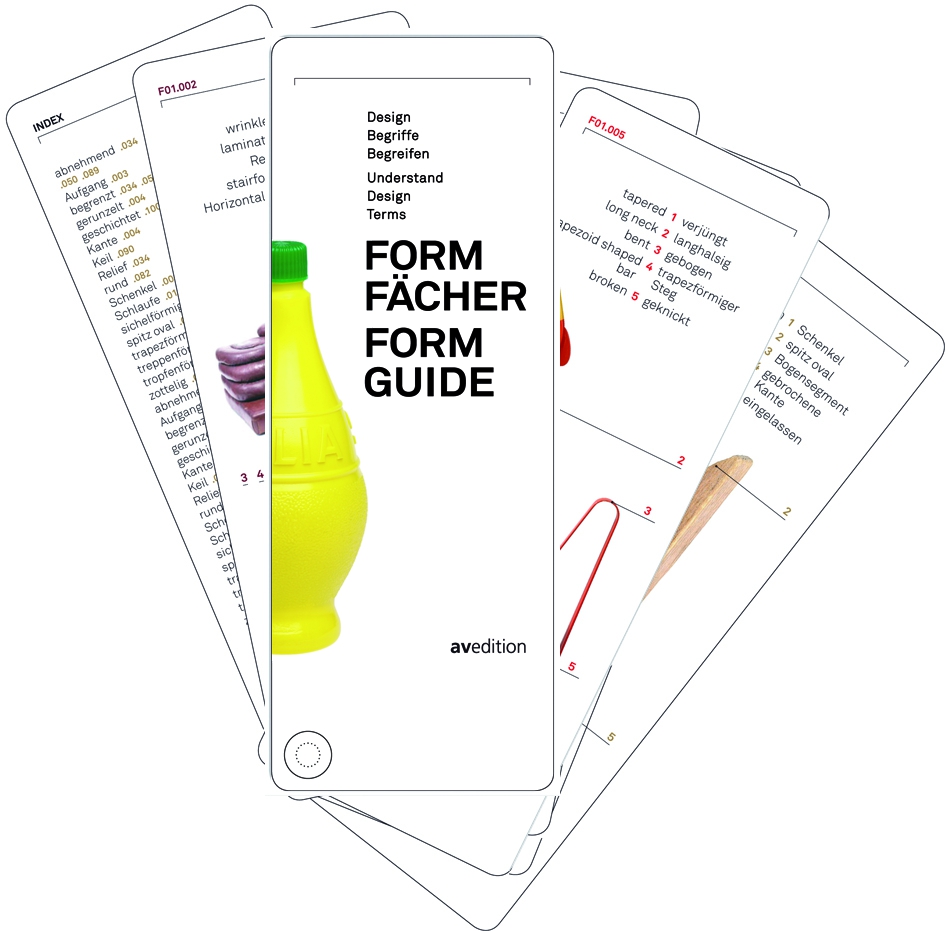
Handy illustrated dictionary of key design terms The perfect tool for students, teachers and practitioners If you love colour guides, you will love the form guide The form guide hones the awareness for the design of objects and helps use terms more precisely. Using examples, a basic terminology is developed which aids communication about design in practice and education. The versatile vocabulary can be used to precisely describe product forms, constructions and impressions.The 100 products selected for this purpose are presented with a brief description of their origin, making the form guide an informative tool, closer at hand and more comprehensive than any book could be. Renowned design colleges and institutes have collaborated on the development of the form guide: Zurich University of the Arts (Industrial Design department), the Museum of Design Zurich (design collection), the Burg Giebichenstein University of Art and Design Halle, and idea...Institut [interior design environment and architecture], Halle (Saale) Germany.
Product innovations and design trendsThe renowned competition looks back on a 20-year-old tradition and has firmly established itself in the German competetion landscape. The publication presents all award-winning products from all design disciplines, e.g. the following categories: manufacturing, medicine, bathroom, kitchen, living, ambience, lifestyle, lighting, communication, optics, sports, outdoor, public design, architecture, transport and circulation. The Design Center Stuttgart brings design topics to public attention and shows the possibilities of a consistent use of professional design for product development and corporate identity.

The aed is an initiative founded by a highly committed not-profit group of engineers, architects and designers. Its aim is to advance – and to promote – public awareness of the extensive creative expertise located in the Stuttgart region – from product design and graphic design via multimedia professions and engineering through to architecture.Since its foundation the aed has organised hundreds of events that were dedicated to the whole depth and breadth of design issues. The aed highlights an enormous array of topics, inviting everybody to an open exchange. It thus creates a unique platform for interdisciplinary exchange between designers and all those interested in design. The book offers a deep insight into the topics, places and people that have been an integral part of the association’s work over the past years.